
Call Us
0086-13486123098 0086-571-58838718
Send Us
- All
- Product Name
- Product Keyword
- Product Model
- Product Summary
- Product Description
- Multi Field Search
Views: 0 Author: Site Editor Publish Time: 2025-08-18 Origin: Site


Rolling mills are essential in metalworking, shaping materials into various forms like sheets and bars. But what powers these powerful machines? The motor used is critical to the efficiency and precision of the process. In this post, we’ll explore the two main motor types used in rolling mills: DC motors and AC motors, and how each one impacts the operation.
Rolling mills are essential machines in the metalworking industry, designed to shape metal by passing it through a series of rollers. These mills play a crucial role in transforming raw metal into various finished products such as sheets, strips, bars, and plates. The process involves controlling the pressure, temperature, and speed at which the metal is rolled, allowing for precise adjustments in thickness and shape. This level of control ensures that the metal meets specific dimensions and material properties required for different applications. Rolling mills are widely used in industries like automotive, construction, and manufacturing for producing high-quality metal components.
Some common products created by rolling mills include:
Sheets: Thin, flat pieces of metal used in various industries.
Strips: Long, narrow metal pieces for further processing.
Bars: Thick metal bars used in construction and manufacturing.
Plates: Flat, heavy metal sections for structural purposes.
The rolling process involves passing metal through a pair of rollers to reduce its thickness and shape it into the desired form. The metal is typically heated to soften it before rolling, which makes the process easier and more efficient.
The key to successful rolling is precise control of speed and torque. If the rollers' speed is too high or too low, it can result in irregular thickness or defects in the metal. Similarly, maintaining the right torque ensures the material passes smoothly through the rollers, achieving consistent results.
Motors are the backbone of rolling mills, providing the power necessary to turn the rollers. These rollers are responsible for shaping metal into various forms. Without motors, the mill would not function effectively, as it requires significant force to press and shape the metal.
High torque and precise speed control are essential to maintain product quality and consistency. Without the right motor, irregularities in the metal, like inconsistent thickness or defects, could easily occur.
High Starting Torque
Rolling mills often deal with heavy metal, which requires a motor with high starting torque. This is particularly important at the beginning of the rolling process when large amounts of force are needed to get the metal moving.
Precise Speed Control
Motors need to offer fine control over the speed of the rollers. This allows mills to maintain consistent thickness and quality across all products, from sheets to bars.
Durability
Rolling mills work in harsh conditions, with high temperatures and pressure. Motors must be able to withstand these challenges, ensuring reliable operation over time.
A direct current (DC) motor operates on electrical current that flows in a single direction. This type of motor is known for its ability to provide precise control over both speed and torque, offering exceptional flexibility. In a DC motor, electrical energy is converted into mechanical energy, causing a rotor to spin. This rotational motion is perfect for applications requiring variable speeds or high torque. The ability to control speed and torque precisely makes DC motors ideal for various industrial applications, including rolling mills, where heavy loads and consistent control are crucial for efficient operation and product quality.
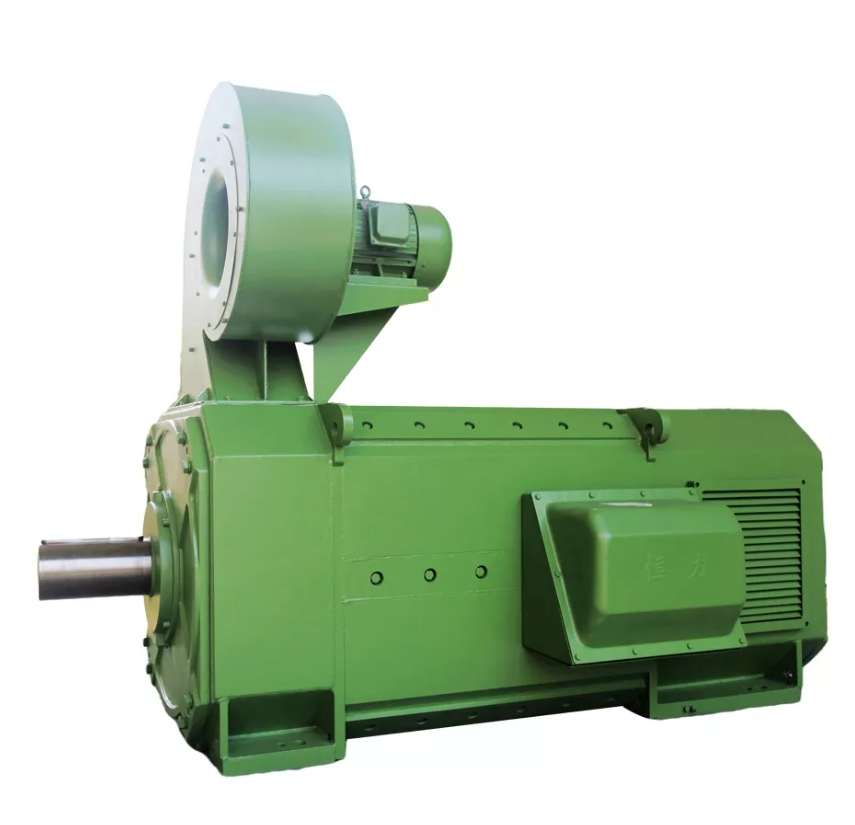
DC motors have specific features that make them ideal for rolling mills, especially in applications requiring high precision.
High Starting Torque: Rolling mills often require heavy-duty motors that can exert significant force at the beginning of the process. DC motors are known for their ability to deliver high starting torque, which is crucial when starting heavy rolling processes.
Variable Speed Control: One of the standout features of DC motors is their ability to vary speeds effortlessly. This makes them perfect for rolling mills, where different stages of rolling require different speeds to achieve the right material thickness and properties.
Applications: DC motors are commonly used in older rolling mills and specialized applications that need consistent speed and torque. These motors provide reliable performance in settings where specific and steady parameters are necessary, such as high-quality metal production.
DC motors offer several advantages that contribute to their effectiveness in rolling mills:
Consistency: One of the key benefits of DC motors is their ability to maintain a steady speed and torque. This consistency ensures that the metal being processed maintains uniform thickness, which is critical for the quality of the final product.
Precise Control: The precision of DC motors makes them ideal for situations requiring fine control over speed. Rolling mills often need to adjust the speed slightly at various stages of production to ensure the metal shapes correctly. DC motors offer the sensitivity needed to fine-tune this process with ease.
High Torque at Low Speeds: DC motors can provide higher torque at lower speeds, which is essential for processes that require heavy loads to be moved slowly and steadily, such as in the initial stages of rolling.
Alternating current (AC) motors operate on the principle of alternating electrical currents, which flow in both directions. Unlike direct current (DC) motors, where the current flows in one direction, AC motors use the alternating current to produce rotational motion. This makes them highly efficient for continuous operation. AC motors have fewer moving parts compared to DC motors, which makes them more reliable and durable over time. The simplicity of their design helps reduce wear and tear, making AC motors ideal for long-term use in demanding environments. Additionally, AC motors can operate at various speeds and power levels, depending on the requirements of the system. Their lower maintenance needs and energy efficiency make them an attractive choice in industries such as manufacturing, transportation, and rolling mills, where consistent power is essential for large-scale operations. AC motors provide smooth and stable performance with reduced maintenance costs.
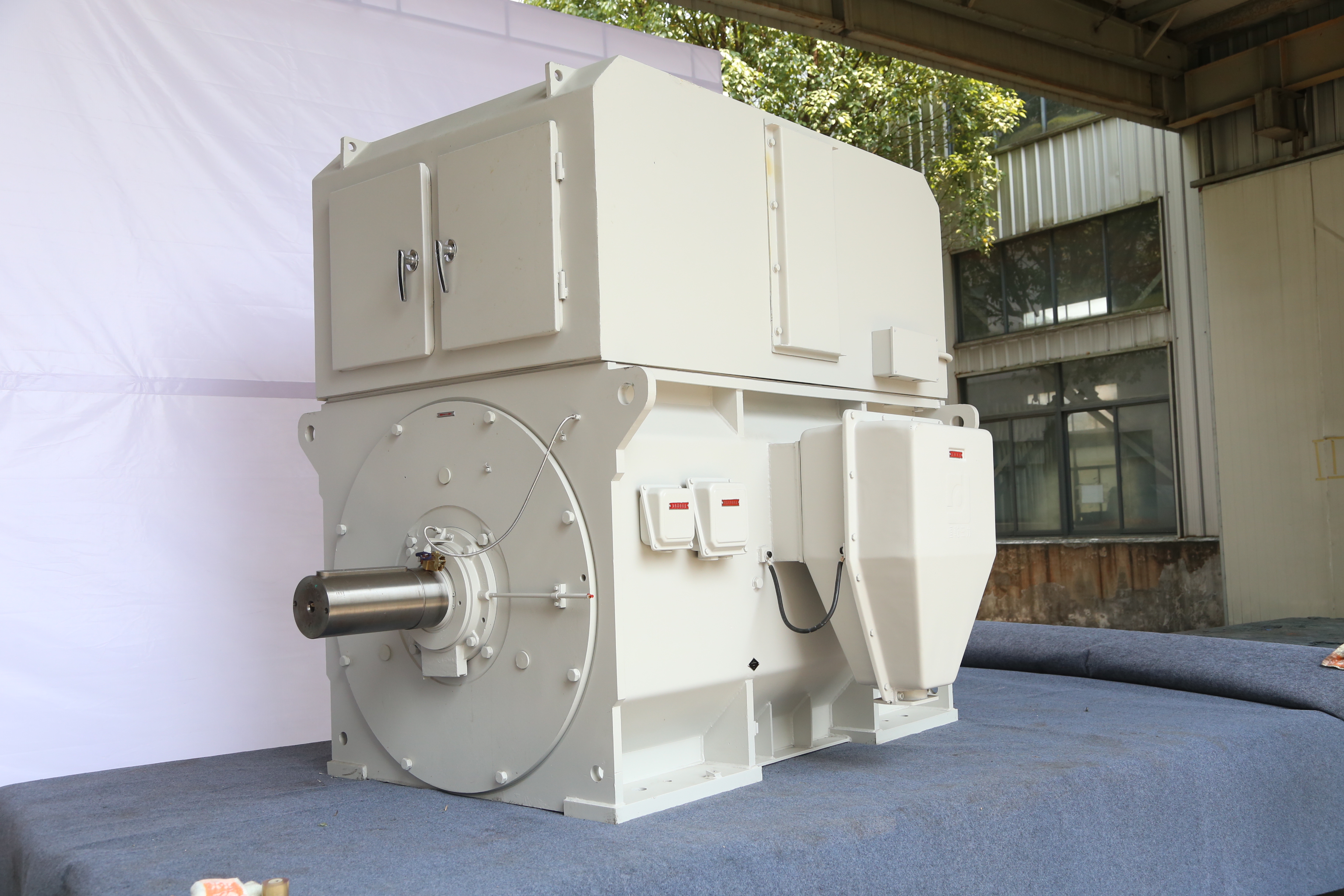
While DC motors still have their place in rolling mills, AC motors are becoming more common due to several key factors that align with the needs of modern rolling mills.
Efficiency: AC motors are more energy-efficient than their DC counterparts, which helps lower operational costs. These motors use less power while delivering the same, if not better, performance. With rising energy costs, mills benefit from the improved efficiency of AC motors, leading to reduced electricity consumption.
Maintenance: AC motors require significantly less maintenance compared to DC motors. Because they have no brushes or commutators (which wear out over time in DC motors), they tend to last longer and need fewer repairs. This makes them a more reliable choice in long-term operations, particularly in high-demand settings like rolling mills.
Cost-Effectiveness: AC motors tend to be more affordable in terms of both initial cost and maintenance. Over the lifespan of a motor, these savings can be substantial. Given their long service life and low operating costs, AC motors are often the more cost-effective choice, especially for larger mills.
AC motors bring several benefits to rolling mills, which explain their growing popularity:
Higher Power Factor: AC motors typically have a higher power factor compared to DC motors. This means they are more efficient in converting electrical energy into mechanical energy, which can lead to better overall system performance. In environments where maximizing power efficiency is essential, AC motors perform well.
Durability: These motors are built to last. AC motors have fewer components that are subject to wear and tear. This durability is critical in rolling mills where the motors operate under heavy loads and harsh conditions. The robust construction allows them to function smoothly for extended periods without significant issues.
Use in Larger Mills: Due to their efficiency and durability, AC motors are becoming increasingly common in large-scale rolling mills. They are capable of handling the heavy demands of high-capacity mills, especially in industries like steel manufacturing, where massive amounts of metal are processed.
Torque
DC motors are particularly known for their high starting torque. This makes them ideal for applications where heavy loads need to be started smoothly, such as in the initial rolling stages. On the other hand, AC motors are more efficient for continuous operation once the mill is running. They can maintain a constant output over long periods without the need for frequent adjustments.
Speed Control
DC motors offer more precise control over speed. This allows for fine-tuned adjustments during the rolling process, which is crucial for maintaining consistent metal thickness. AC motors, however, are generally better suited for constant-speed operations. While they are efficient, they don't provide the same level of flexibility in speed control as DC motors.
DC Motors
DC motors require more maintenance because of components like brushes and commutators. These parts can wear out over time and need regular inspection and replacement. However, this increased maintenance is often a trade-off for the precise control DC motors provide.
AC Motors
AC motors have fewer moving parts, which means they are generally easier and cheaper to maintain. The absence of brushes and commutators leads to lower maintenance costs and a longer lifespan. Additionally, modern AC motors come equipped with features like energy recovery, which helps improve efficiency and reduce wear.
DC Motors
DC motors typically have a higher initial cost. This is due to their more complex design and the need for additional maintenance. However, the precise control they offer may justify the investment for specific applications.
AC Motors
AC motors are generally more affordable upfront and have lower long-term maintenance costs. Their simpler design and energy-efficient features make them a cost-effective option, especially for larger mills that require high reliability over extended periods.
| Characteristic | DC Motors | AC Motors |
|---|---|---|
| Torque Performance | High starting torque, ideal for heavy loads. | Efficient for sustained, continuous operation. |
| Speed Control | Offers precise speed control for adjustments. | Best for maintaining constant speed. |
| Maintenance Demands | Requires more maintenance due to brushes. | Lower maintenance due to fewer moving parts. |
| Cost Comparison | Higher initial cost and more maintenance. | More cost-effective and energy-efficient over time. |
DC motors are ideal for applications requiring high torque and precise speed control, while AC motors are preferred for energy efficiency and low maintenance in modern rolling mills. The choice between DC and AC motors depends on the specific requirements of the rolling mill, whether it's precision, efficiency, or maintenance costs. Businesses should carefully consider the trade-offs between cost, performance, and long-term reliability when selecting the right motor for their rolling mills.
A: Motors provide the necessary power to turn rollers, shaping metal products. High torque and precise speed control ensure consistency and quality in the final product.
A: DC motors excel in providing high starting torque and variable speed control, making them ideal for applications requiring precision and consistent torque.
A: AC motors are energy-efficient, require less maintenance, and have a longer lifespan, making them cost-effective for large-scale operations.
