
Call Us
0086-13486123098 0086-571-58838718
Send Us
- All
- Product Name
- Product Keyword
- Product Model
- Product Summary
- Product Description
- Multi Field Search
Views: 0 Author: Site Editor Publish Time: 2025-10-25 Origin: Site


Industrial AC motors are the backbone of modern industry, powering everything from heavy machinery and production lines to HVAC systems and precision equipment. Understanding the types, principles, applications, and maintenance of AC motors is essential for engineers, plant managers, and industrial operators who aim to maximize efficiency, reliability, and operational longevity. This guide provides a comprehensive overview of synchronous, induction, and linear motors, along with practical insights into performance optimization and routine maintenance practices.
AC (alternating current) motors convert electrical energy into mechanical energy through the interaction of magnetic fields. They consist of two main components: the stator, which generates a rotating magnetic field using AC windings, and the rotor, which responds to the magnetic field to produce motion. Unlike DC motors, AC motors can operate directly on alternating current, making them simpler and more durable for industrial applications.
Synchronous motors are designed to operate with the rotor rotating in exact synchronization with the supply current frequency. Unlike induction motors, they do not experience slip under normal operating conditions, which allows them to maintain a constant speed regardless of load variations. The rotor in synchronous motors can be designed in different ways. One common type is the salient pole rotor, which features physically separated poles with concentrated windings. This design is ideal for low-speed, high-torque applications. Another type is the cylindrical rotor, also known as the non-salient rotor, which consists of a smooth forged steel surface with windings placed in slots. The cylindrical design provides a uniform air gap between the rotor and stator, making it suitable for high-speed performance.
The rotor’s magnetic field can be excited using several methods. Traditional slip rings with DC supply deliver direct current to the rotor windings. A brushless exciter uses a small AC generator mounted on the rotor shaft along with a rectifier, eliminating the need for brushes and reducing maintenance requirements. Some synchronous motors use permanent magnet rotors, which provide a fixed magnetic field and help minimize energy losses.
Synchronous motors are commonly applied in industrial settings for driving pumps, compressors, and fans. They are also used in high-precision machinery that requires exact speed control and in timing equipment such as synchronous clocks. The key advantages of synchronous motors include constant speed operation, high efficiency at full load, and the ability to improve system power factor by acting as a leading load. However, these motors generally have a higher initial cost compared to induction motors, possess more complex construction—particularly those with slip-ring excitation—and require periodic maintenance for brushes and slip rings.
Induction motors, also known as asynchronous motors, are the most widely used type of AC motors in industrial environments due to their simple design, durability, and low cost. The rotor in an induction motor can either be a squirrel cage rotor or a wound rotor. The squirrel cage design is straightforward, robust, and requires minimal maintenance, making it suitable for general industrial machinery. The wound rotor, on the other hand, has windings connected to slip rings, which allows for external resistance to control torque and adjust speed.
Induction motors are extensively employed to drive conveyor belts, pumps, and HVAC systems. They are also used in electric vehicles, industrial fans, and a variety of general-purpose machinery. Their primary advantages include their robustness, low maintenance requirements, and cost-effectiveness for large-scale industrial deployment. Despite these benefits, induction motors exhibit slight speed variations due to rotor slip, and they typically have a lagging power factor under low-load conditions.
Linear motors are a specialized type of induction motor that produces direct linear motion instead of rotational movement. Essentially, a linear motor is a conventional rotary motor “unrolled” to generate motion along a straight path. The primary component of a linear motor contains windings that generate a moving magnetic field, while the secondary component is typically a flat conductive plate or magnetically conductive surface.
Linear motors offer several advantages, including the elimination of mechanical transmission systems, which reduces maintenance and improves efficiency. They also provide high acceleration, precise positioning, and smooth motion. Industrial and commercial applications for linear motors include automated assembly lines, maglev trains and other high-speed transportation systems, as well as medical devices like MRI tables that require precise linear positioning.
| Feature | Synchronous Motor | Induction Motor |
|---|---|---|
| Speed | Constant, exact | Slightly varies due to slip |
| Efficiency | High at full load | Moderate, improved with VFDs |
| Power Factor | Can be leading | Usually lagging |
| Maintenance | Higher, brushes/slip rings | Lower, robust construction |
Synchronous motors are ideal for high-power, precision-speed applications, whereas induction motors excel in durable, cost-sensitive environments.
Power Factor Correction Capacitors – Reduce reactive power and improve system efficiency.
Variable Frequency Drives (VFDs) – Adjust motor speed to match load, saving energy.
High-Efficiency Motors – Designed with tighter tolerances and better materials to reduce losses.
Load Management – Operate motors near rated capacity for optimal performance.
Regular Maintenance – Bearings, insulation, and alignment checks reduce mechanical and electrical losses.
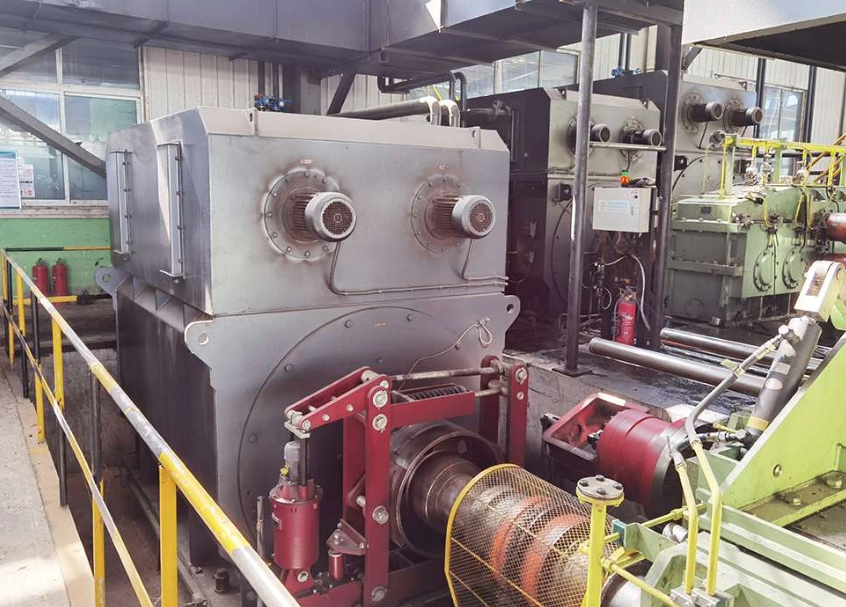
Industrial AC motors play a critical role across a wide range of industries due to their reliability, efficiency, and versatility. Different types of AC motors—synchronous, induction, and linear—are tailored for specific operational needs, from heavy industrial machinery to precision equipment.
Synchronous motors are widely used in applications requiring precise speed control and consistent operation. In utility plants, chemical processing facilities, and heavy industrial settings, synchronous motors drive pumps, fans, and compressors, ensuring stable performance under constant load conditions. They are also integral to precision production machinery and timing devices, where maintaining an exact rotational speed is crucial. Additionally, synchronous motors are often employed for power factor correction in industrial environments, helping optimize electrical efficiency and reduce energy costs. Their ability to operate efficiently at synchronous speed makes them indispensable in systems where accuracy and energy optimization are priorities.
Induction motors are the workhorses of modern industry due to their robustness and ease of maintenance. They are commonly found in HVAC systems, often paired with variable-speed drives to enhance energy efficiency and provide precise airflow control. Induction motors also power conveyor systems, electric vehicles, and a wide variety of household and industrial machinery, ranging from washing machines to assembly line equipment. Their simplicity, durability, and cost-effectiveness make them suitable for continuous operation under varying load conditions. Additionally, induction motors are frequently used in industrial automation processes where consistent torque and reliable performance are required.
Linear motors provide direct linear motion without the need for mechanical rotary-to-linear conversion, making them ideal for high-speed, high-precision applications. In industrial automation, they are commonly employed on assembly lines and robotic systems to achieve rapid, accurate positioning. Linear motors are also used in maglev trains and other advanced transportation systems, where smooth, frictionless motion enables higher speeds and reduced maintenance. In the medical field, linear motors are utilized in imaging equipment, surgical robots, and other devices requiring precise, repeatable motion. Their combination of speed, accuracy, and low maintenance requirements makes them an essential component in both cutting-edge industrial and technological applications.
Industrial AC motors are critical components in many systems, and proper maintenance ensures reliability, longevity, and optimal performance. Routine inspection and preventive care can prevent costly downtime and equipment failure.
Check bearings regularly for signs of wear, overheating, or unusual noise.
Lubricate bearings according to manufacturer specifications—over-lubrication can be as harmful as under-lubrication.
Replace bearings showing signs of spalling, pitting, or corrosion.
Remove dust, dirt, and debris from windings, laminations, and ventilation slots.
Inspect the stator and rotor for signs of insulation damage, rust, or mechanical wear.
Use vacuuming, compressed air, or approved solvents—avoid moisture and conductive residues.
Inspect terminal connections for tightness and corrosion. Loose connections can cause arcing and overheating.
Test insulation resistance periodically using a megohmmeter to detect deterioration.
Verify proper grounding to prevent electrical faults and ensure operator safety.
Inspect brushes for wear and replace them before they reach critical levels.
Clean slip rings to remove carbon deposits, oxidation, and dirt, ensuring stable current flow.
Check brush spring tension for consistent contact pressure.
Ensure fans, vents, and air filters are clean and unobstructed.
Inspect liquid cooling systems for leaks, proper flow, and temperature control.
Monitor motor temperature under load—consistent overheating can indicate blocked airflow or other mechanical/electrical issues.
Perform periodic alignment checks of the motor shaft with the driven equipment.
Use vibration analysis tools to detect early signs of imbalance, misalignment, or bearing failure.
Correct misalignment promptly to prevent excessive wear and energy loss.
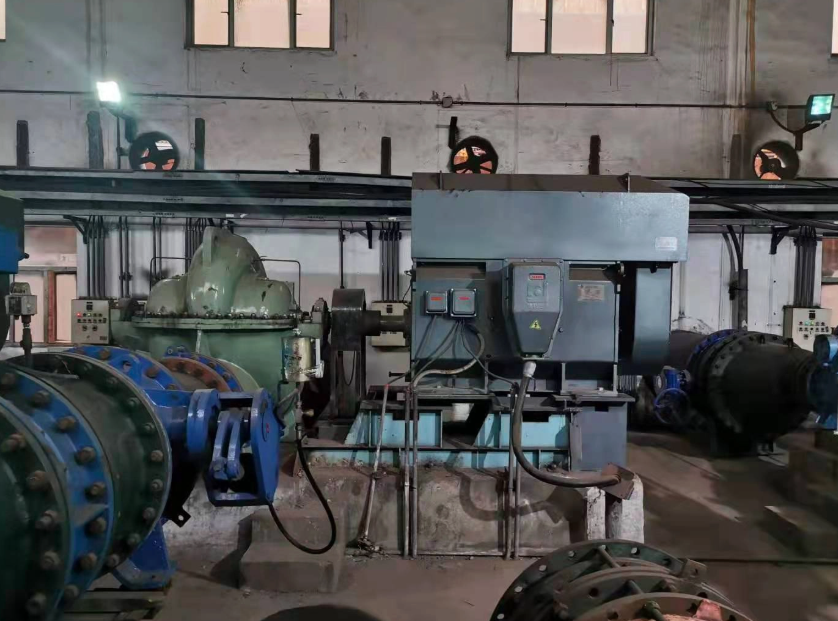
Causes: improper installation, worn coupling, thermal expansion.
Effects: vibration, noise, uneven bearing wear, reduced efficiency.
Solutions: realign shafts, inspect couplings, and balance rotors as needed.
Causes: blocked ventilation, overloading, high ambient temperature, insufficient lubrication.
Effects: insulation breakdown, reduced motor life, potential failure.
Solutions: improve cooling, reduce load, clean vents, and ensure proper lubrication.
Causes: short circuits, insulation deterioration, voltage spikes, loose connections.
Effects: motor stalling, tripping of protective devices, catastrophic damage in extreme cases.
Solutions: tighten connections, replace damaged windings, install surge protection, and perform insulation resistance testing.
Causes: improper lubrication, contamination, misalignment, excessive load.
Effects: vibration, noise, reduced efficiency, potential motor seizure.
Solutions: follow proper lubrication schedules, maintain clean environments, and replace worn bearings promptly.
An AC motor consists of two main parts: the stator, which generates a rotating magnetic field using AC windings, and the rotor, which reacts to the magnetic field to produce mechanical motion.
AC motors should be maintained according to their operating conditions, with bearings checked and lubricated every 3–6 months, stator and rotor surfaces cleaned at least annually, brushes and slip rings inspected quarterly for synchronous motors, and cooling systems checked monthly for dust or blockages.
Common problems in AC motors include rotor or stator misalignment causing vibration, overheating due to blocked ventilation or overloading, electrical failures such as short circuits or insulation breakdown, and bearing failures caused by improper lubrication, contamination, or excessive load.
Preventive maintenance is important because it minimizes unexpected downtime, extends motor lifespan, maintains energy efficiency, reduces long-term maintenance costs, and enhances operational safety by preventing electrical or mechanical failures.
Proper selection, operation, and maintenance of industrial AC motors can significantly enhance performance, reduce downtime, and extend equipment lifespan. For businesses seeking high-quality, reliable AC motor solutions, Hangzhou New Hengli Electric Machine MFG. Co., Ltd. offers a wide range of synchronous, induction, and specialized motors designed to meet demanding industrial applications while ensuring efficiency and durability. Partnering with Hangzhou New Hengli ensures access to advanced motor technology and professional support for optimal industrial performance.
