


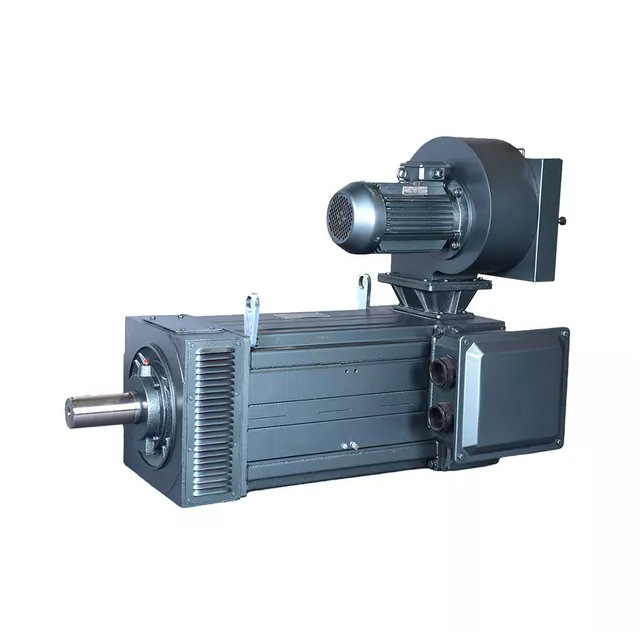
In B2B procurement, a motor is never just a motor. A motor choice changes your machine design, your control cabinet, your commissioning plan, and your service schedule. That is why the debate between a Brushless DC Motor, an AC Motor, and a Brushed Motor keeps coming up in industrial projects that care about uptime, repeatable process quality, and total cost of ownership.
In heavy duty environments such as metallurgy, mining, cement, chemical processing, and paper making, the AC Motor has long been the default because the AC Motor supply chain is mature and the AC Motor service model is standardized. Industrial manufacturers also emphasize that their AC Motor ranges can cover very high power and can be customized for harsh environments and global delivery, which is a common requirement for multinational buyers.
A practical rule for most buyers is: choose an AC Motor as the industrial baseline, choose a Brushless DC Motor when you need tighter control and lower routine maintenance, and choose a Brushed Motor only when low upfront cost outweighs brush wear and service needs.
The key is to treat each option as a system, not a label. An AC Motor decision often means an AC Induction Motor plus a drive when variable speed is required. A Brushless DC Motor decision means electronic commutation and a controller. A search for AC Brushless Motor usually means you want brushless performance powered from AC, which is typically an AC input driver feeding a brushless motor.
If your application is a mixer, you will see another keyword appear in RFQs: Low Rpm AC Motor For Mixer. That phrase usually means the buyer needs stable low speed torque, smooth rotation, and process repeatability. In many plants, that requirement becomes an AC Motor plus drive discussion, or an AC Brushless Motor package discussion, depending on how tight the speed tolerance must be.
Directory
Motor Construction
Efficiency
Service and Maintenance: DC vs. BLDC
Speed Stability
High Speed Operation
Want to learn more?
Motor Construction
Motor construction is mainly about commutation: a Brushed Motor uses brushes and a commutator, a Brushless DC Motor uses electronic commutation, and an AC Motor such as an AC Induction Motor produces a rotating field in the stator so the rotor follows without brushes.
Brushed Motor construction and what it means for an AC Motor buyer
A Brushed Motor is mechanically commutated. Brushes slide on the commutator and switch the energized rotor coils as the shaft turns. This makes a Brushed Motor easy to drive with simple DC power in basic cases, but it also creates a wear interface. In B2B settings, that wear interface becomes a service item that can limit uptime if brush replacement is difficult.
Brush wear also changes electrical behavior. Brush contact and commutator switching can create arcing related noise and dust. For buyers used to an AC Motor fleet, this is an unfamiliar maintenance pattern, which is why many industrial lines prefer an AC Motor or a brushless system when duty cycle is high.
Brushless DC Motor construction and why AC Brushless Motor is common
A Brushless DC Motor replaces mechanical commutation with electronics. The rotor typically has permanent magnets, and the stator has windings. The controller energizes phases in sequence, and that sequence can be tuned to reduce torque ripple and noise. A widely used technical reference explains that brushless motors perform commutation electronically, often using three phase windings and feedback methods such as Hall sensors.
For many buyers, AC Brushless Motor is the practical packaging of this idea. AC Brushless Motor usually means AC power in, then rectification and inverter control in the driver, then electronic commutation in the motor. For procurement, the AC Brushless Motor choice is a motor plus driver plus interface specification.
In many plants, the first screening question is whether the machine can stay with an AC Motor standard. If the answer is yes, the AC Motor path usually starts with an AC Induction Motor and only adds complexity when the process demands variable speed. If the answer is no, the buyer often evaluates AC Brushless Motor packages because AC Brushless Motor designs keep the AC power interface while adding brushless control.
AC Motor and AC Induction Motor construction in industrial duty
An AC Motor, especially an AC Induction Motor, is brushless by nature. The stator field rotates, and the rotor follows by induction. The AC Motor can run direct on line for fixed speed, or the AC Motor can run from a drive for variable speed. For industrial buyers, this flexibility is a major reason the AC Motor remains the default in many plants.
Industrial suppliers often highlight AC Motor customization and large power capability. One manufacturer states its AC Motor range can reach 15,000 kW and emphasizes customized AC Motor solutions for different working environments, with IEC 60034 alignment and ISO 9001:2015 certification.
For clarity in procurement language, it helps to repeat the three common labels in one sentence: AC Motor refers to the motor technology family used broadly in industry, AC Induction Motor is the most common AC Motor subtype for general duty, and AC Brushless Motor refers to a brushless motor system powered from AC through a driver.
Efficiency
Efficiency is a system outcome: an AC Motor can be very efficient at rated power, a Brushless DC Motor and an AC Brushless Motor package can be very efficient at partial load because there is no brush friction, and a Brushed Motor is typically less efficient due to brush friction and commutation losses.
Efficiency thinking for an AC Motor project
An AC Motor buyer should evaluate efficiency at the duty point, not only the nameplate. The AC Motor frame temperature affects insulation life and bearing stress. In continuous duty lines, the AC Motor efficiency directly affects your energy cost and your cooling load.
In heavy equipment, the efficiency impact is multiplied by scale. An industrial manufacturer highlights AC Motor capability up to 15,000 kW for heavy duty applications, which signals that the AC Motor class is the core technology for large industrial systems where efficiency and energy saving matter.
Brushless DC Motor efficiency and the AC Brushless Motor advantage
Many references describe Brushless DC Motor designs as more energy efficient than Brushed Motor designs because there is no brush friction. This difference is often most visible at light load, low speed, and intermittent duty. That is exactly why AC Brushless Motor packages are considered in automation, conveyors, and precision motion.
For Low Rpm AC Motor For Mixer duty, the efficiency question is often thermal. When an AC Motor runs at low frequency under a drive, fan cooling can be weaker and the AC Motor can heat up. In some mixer designs, an AC Brushless Motor package can improve low speed efficiency and control, reducing heat rise and improving batch consistency.
Why Brushed Motor efficiency is rarely the winner in industrial AC Motor fleets
A general comparison notes that brush friction and wear create energy loss that impacts DC motor efficiency, and it also describes how brushless DC solutions can offer better efficiency and reduced maintenance. In a Brushed Motor, that efficiency loss usually appears as extra heat and extra service events.
For B2B buyers, the efficiency decision is not only kWh. It is also the cost of ventilation, the risk of temperature alarms, and the cost of planned and unplanned stops.
A simple efficiency decision list
If you need high power continuous duty: the AC Motor and AC Induction Motor ecosystem is usually the best fit
If you need strong partial load efficiency and controllability: AC Brushless Motor or Brushless DC Motor is often the best fit
If you need minimum upfront cost and short duty: Brushed Motor can be acceptable with clear service planning
Service and Maintenance: DC vs. BLDC
For service and maintenance, the biggest divider is brush wear: a Brushed Motor needs brush and commutator maintenance, a Brushless DC Motor and AC Brushless Motor avoid brushes but depend on electronics and bearings, and an AC Motor focuses maintenance on bearings, insulation health, and the drive when the AC Motor is variable speed.
AC Motor maintenance: predictable routines, predictable spares
In most plants, AC Motor maintenance is well understood. Bearings, alignment, vibration, insulation tests, and cooling path cleaning are standard tasks. If the AC Motor uses a VFD, the VFD becomes part of the maintenance plan, including fans, capacitors, filters, and parameter backups.
Industrial AC Motor products for demanding duty often include monitoring. A variable speed AC Motor example for rolling mill duty lists multiple PT100 sensors for windings and bearings, enclosure protection options such as IP54 and IP55, class F insulation, and an encoder option. These features help the AC Motor survive heavy duty operation and help maintenance teams detect risk early.
Brushed Motor maintenance: planned wear that can become unplanned downtime
A Brushed Motor requires brush replacement. Technical references describe that brushes wear and the commutator also wears over time, eventually affecting motor function. In a B2B line, that means service windows, access design, and spare brush inventory.
If your machine is compact, sealed, or guarded, brush access can be difficult, and the Brushed Motor can turn into a downtime risk. That is why many buyers who normally specify an AC Motor still avoid a Brushed Motor for high duty applications.
DC vs BLDC: why Brushless DC Motor service is different
A Brushless DC Motor eliminates brushes, so one recurring maintenance item disappears. A reference comparing brushed and brushless designs highlights longer lifetime for brushless designs because there are no brushes to wear, while brushed designs have shorter lifetime because brushes wear out.
However, Brushless DC Motor service shifts focus to electronics and bearings. In an AC Brushless Motor package, confirm driver protection, thermal design, and spare driver availability. For industrial reliability, treat the driver as a replaceable module and document parameter sets.
Maintenance focused selection list
If the site wants a standardized maintenance model: AC Motor or AC Induction Motor is usually easiest
If the site wants fewer wear parts and stable performance: Brushless DC Motor or AC Brushless Motor is usually easier
If the site accepts brush service for low cost: Brushed Motor can fit, but plan access and inventory
Speed Stability
Speed stability depends on closed loop control: a Brushless DC Motor and AC Brushless Motor commonly use feedback such as Hall sensors to regulate speed, an AC Motor can be very stable with a VFD and feedback, and a Brushed Motor tends to vary more with load unless the controller compensates carefully.
If your specification literally says Low Rpm AC Motor For Mixer, write down the minimum rpm, the maximum torque at that rpm, and the allowable speed error. Then decide whether the Low Rpm AC Motor For Mixer target is best met by an AC Motor with VFD and encoder, or by an AC Brushless Motor package that holds speed tightly by design.
Low Rpm AC Motor For Mixer: speed stability as product quality
Low speed stability drives quality in mixing and dosing. A Low Rpm AC Motor For Mixer requirement usually means stable torque, stable speed under changing viscosity, and smooth rotation that avoids surging.
An AC Motor direct on line has limited low speed flexibility. An AC Induction Motor speed changes with slip, and slip changes with load. When you add a VFD, the AC Motor gains variable speed. When you add feedback such as an encoder, the AC Motor gains stronger speed holding under load.
Brushless DC Motor stability and why AC Brushless Motor is searched
A technical guide explains that Hall sensors can detect rotor position transitions, enabling the controller to calculate speed and adjust commutation to maintain target speed. This is a core reason Brushless DC Motor systems can hold speed well.
In factories that prefer AC power distribution, AC Brushless Motor packages provide the same control advantage with AC input. For Low Rpm AC Motor For Mixer, that can translate to more consistent mixing, less temperature drift, and easier automation integration.
AC Motor speed stability with modern drives
Modern VFD control can give an AC Motor excellent stability. For some loads, scalar control is enough. For demanding loads, vector control and field oriented methods can improve torque response and speed holding. When speed tolerance is tight, encoder feedback can make the AC Motor behave like a precision actuator.
A heavy duty variable speed AC Motor designed for rolling mill duty includes encoder provision and thermal monitoring, which signals that the AC Motor is intended for controlled operation and protection.
Speed stability selection list for common cases
Low Rpm AC Motor For Mixer: AC Motor with VFD and possible encoder, or AC Brushless Motor package for stable low speed
Conveyor with inspection: AC Motor with VFD, or Brushless DC Motor for compact speed control
Fan and pump: AC Motor is common, VFD used when efficiency or process control is needed
High Speed Operation
High speed operation is usually easier without brush commutation limits: Brushless DC Motor and AC Motor systems can support high speed with correct mechanical design, while Brushed Motor designs can be limited by brush contact behavior and increased arcing at high speed.
What limits speed for each option in practice
A technical reference notes that brushed motor speed can be limited by brushes and commutator, and that brush to commutator contact can become erratic at very high speed, increasing arcing. This is why a Brushed Motor is rarely the first choice for continuous high speed duty in B2B equipment.
A Brushless DC Motor removes that mechanical commutation limit. High speed limits then depend on rotor strength, magnet retention, bearings, and driver switching losses. In an AC Brushless Motor package, driver thermal design is especially important at high speed.
An AC Motor can also run at high speed under a VFD. The AC Motor torque usually declines above base speed in field weakening regions, so the AC Motor must be sized with the torque speed curve in mind. If high speed is important, specify overspeed margin and verify insulation suitability for inverter output.
Torque at speed: why AC Motor and DC choices differ
A motor technology comparison points out that brushed and brushless DC systems can provide relatively flat torque over a wide speed range, while AC Motor torque can reduce as speed increases.
For machine builders, this means an AC Motor high speed design can be excellent, but it often requires clear definition of constant torque and constant power regions, and careful matching between the AC Motor and the drive. Brushless systems can simplify this when constant torque over a wider speed range is a key requirement.
High speed procurement questions that protect your schedule
Required maximum speed and overspeed test requirement
Bearing type and expected bearing life at maximum speed
Rotor balance and mechanical strength guarantee
For AC Motor with VFD, insulation system and bearing current mitigation
For AC Brushless Motor, commutation method and driver heat management
Want to learn more?
To learn more, convert your application into a clear AC Motor specification, then decide whether an AC Induction Motor system, an AC Brushless Motor package, a Brushless DC Motor, or a Brushed Motor best fits your speed, torque, efficiency, and service goals.
A short keyword checkpoint can prevent misunderstandings: if the team says AC Motor, confirm whether they mean fixed speed AC Motor or variable speed AC Motor with VFD. If the team says AC Induction Motor, confirm whether inverter duty features are required. If the team says AC Brushless Motor, confirm driver input range and control interface. If the team says Low Rpm AC Motor For Mixer, confirm low speed torque and cooling requirements.
B2B RFQ checklist focused on AC Motor outcomes
Speed range and torque curve, including the low speed requirement for Low Rpm AC Motor For Mixer
Duty cycle, overload profile, and start stop frequency
Power supply: voltage, frequency, and whether you need AC Motor direct on line, AC Motor with VFD, or AC Brushless Motor driver input
Environment: temperature, dust, humidity, vibration, corrosion
Mechanical interface: mounting, shaft load, gearbox, coupling
Monitoring: thermal sensors, encoder, alarms, protection devices
Documentation: drawings, test reports, quality certificates, spare parts list
Some industrial suppliers highlight customized AC Motor solutions, IEC 60034 alignment, ISO 9001:2015 certification, and export capability to more than 30 countries, which can support multinational qualification and after sales planning.
Competitor viewpoints on AC Motor, AC Brushless Motor, and brushed choices
IEC blog: AC Motor and DC Motor differ mainly by current type, AC Motor is widely used and often cost effective for higher power, AC Motor speed control is commonly achieved using VFDs, and brushless DC offers longer life and lower maintenance than a Brushed Motor.
MPS resource: Brushed motors can be driven simply in basic cases, Brushless DC Motor uses electronic commutation and often three phase windings in star or delta, and a comparison table highlights lifetime, efficiency, noise, torque ripple, and cost differences between brushed and brushless solutions.
OM guide: Brushed motors rely on brushes and a commutator, AC Induction Motor and BLDC pass current through the stator without brush commutation, BLDC can be more energy efficient than brushed due to no brush friction especially at low load, Hall sensors support speed stability, and torque behavior differs between AC Motor and DC technologies as speed increases.
Summary
If you want a robust industrial default, start with an AC Motor and evaluate whether an AC Induction Motor alone or an AC Motor with VFD best matches your process. If you need tighter control, lower routine maintenance, and strong low speed stability for Low Rpm AC Motor For Mixer duty, consider a Brushless DC Motor or an AC Brushless Motor package. If the budget is tight and runtime is limited, a Brushed Motor can work, but only with a realistic brush service plan and access design.
